
Editorial Feature
“Mother — The First Alchemy”
In this curatorial essay, Annita Apostolidou Platis reflects on motherhood as the first alchemical force: the origin of perception, emotional formation, and inner transformation. Moving through mythology, art, poetry, and personal memory, she traces the maternal presence as both a universal archetype and an intimate source of wisdom, protection, and becoming.
“Mother — The First Alchemy”
A curatorial essay by Annita Apostolidou Platis
Before the world is understood, it is felt. And before it is felt, it has already been experienced.
Motherhood is not only the beginning of life. It is the beginning of perception. The first rhythm we encounter is not language, but a heartbeat. The first landscape is not the earth, but the body that carries us. In this sense, the mother is not simply a presence within life. She is the first world we inhabit.
Mother’s Day, as it has evolved in the modern era, offers a gesture of recognition and gratitude. Yet its deeper essence extends beyond time. It touches something primordial—a state in which existence is experienced before it is named or understood.
The Origin of All
In Ancient Greece, the mother was not merely a human role, but a cosmic principle. Gaia was not a symbol, but the very ground of creation. Rhea embodied both protection and the necessity of release. Demeter revealed the most profound human dimension of motherhood: the place where loss transforms into strength, and inner experience reshapes the rhythm of the world.
The maternal was never passive. It was generative, dynamic, and inseparable from the cycles of life.
To speak of the mother is to speak of imprint. Not memory as narrative, but something pre-verbal, inscribed within the body. Through presence or absence, consistency or rupture, the mother shapes the first architecture of the self. She teaches us how to trust, how to receive, how to exist in relation to the world.
Long before identity becomes conscious, it has already been formed.
At this point, motherhood begins to reveal its alchemical nature. It is not only the beginning of life, but also the beginning of perception.
The Maternal in Art
In art, this transformation does not appear as a single image, but as a field of tension and coexistence.
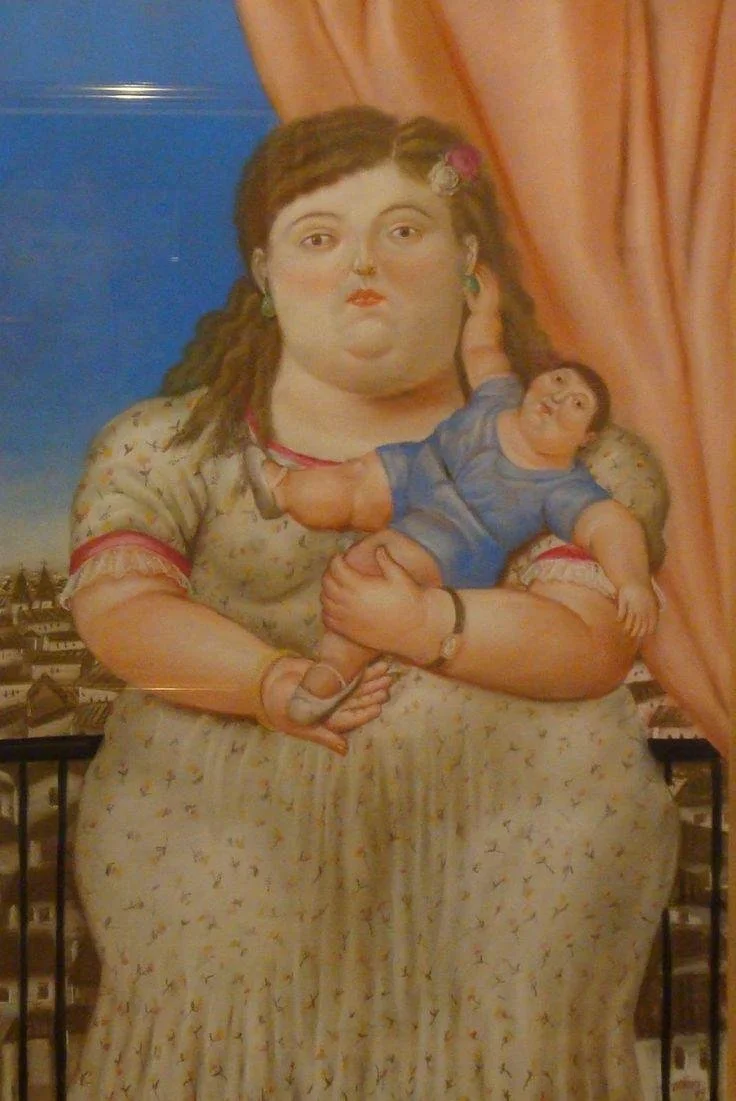
In Fernando Botero’s Mother and Child (1990), the maternal figure becomes monumental, earthly, and protective. Through his unmistakable language of volume, Botero gives the mother an almost architectural presence. Her body becomes more than form; it becomes shelter, territory, and emotional gravity. The child rests within this enlarged world, held by a figure who appears calm, frontal, and timeless. In this work, the mother is not idealized through fragility, but through fullness. She is abundance, protection, and the weight of love made visible.
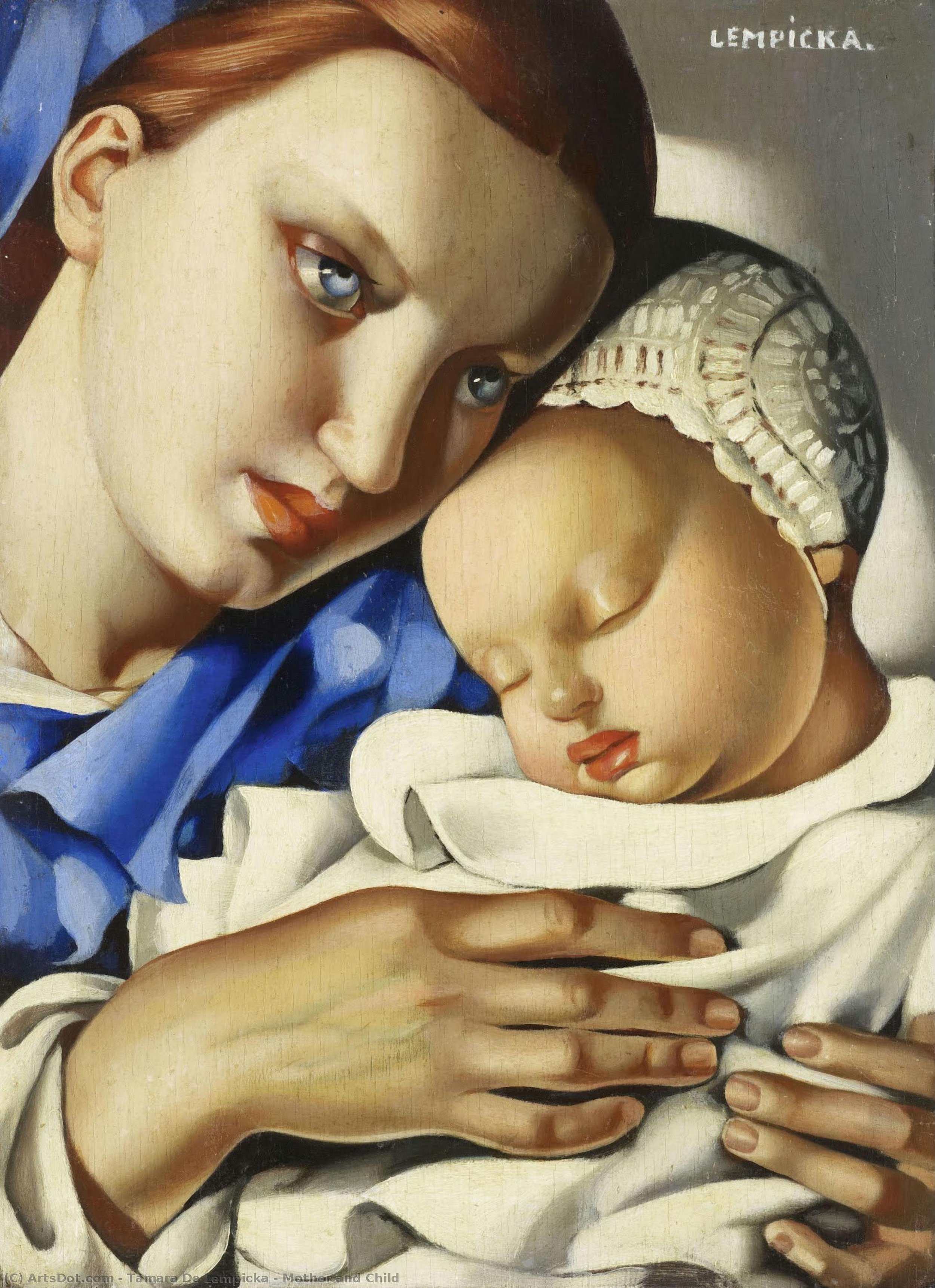
In Tamara de Lempicka’s Mother and Child (1953), motherhood is transformed through elegance, intimacy, and stylized refinement. The mother’s face, polished and sculptural, leans toward the sleeping child with a tenderness that remains composed, almost ceremonial. Lempicka does not present maternity as sentimental softness alone. She gives it dignity, poise, and psychological depth. The child sleeps in a protected silence, while the mother’s gaze carries awareness, beauty, and responsibility. Here, motherhood becomes a refined alchemy: the body becomes care, the gesture becomes protection, and beauty becomes a form of devotion.
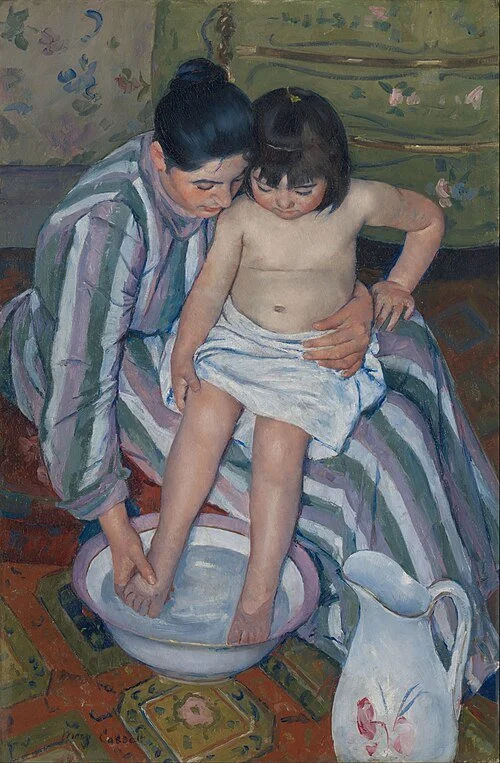
Mary Cassatt, in The Child’s Bath (1893), turns toward the intimacy of daily care. Within the apparent simplicity of the scene lies a profound structure of tenderness, repetition, and trust. The mother does not simply wash the child; she creates a ritual of safety. Through gesture, touch, and concentration, Cassatt reveals motherhood as one of the first forms of emotional education. The child is not only cared for, but gradually introduced to the world through rhythm, closeness, and attention.
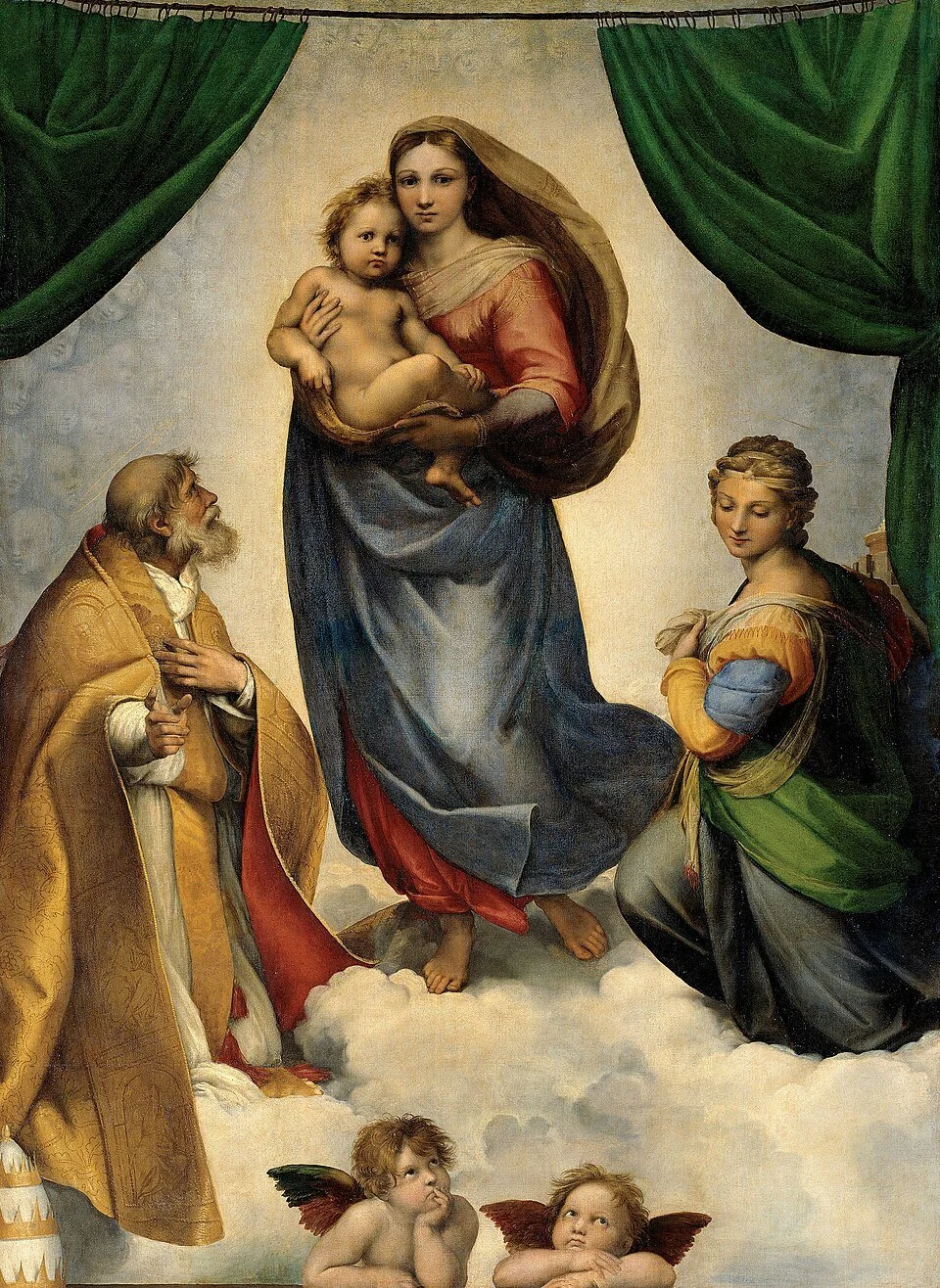
In Raphael’s Sistine Madonna (c. 1512–1514), the maternal gaze carries another kind of knowledge. There is tenderness, but also awareness. The mother holds the child close while already facing the destiny that awaits him. Within this coexistence of intimacy and inevitability, one of the deepest truths of motherhood emerges: to love is also to understand that the child belongs to life beyond the mother’s arms.
Together, these works trace motherhood as an alchemical passage: from body to shelter, from beauty to devotion, from care to consciousness, and from intimacy to destiny.
The Maternal in Poetry
Poetry has approached this condition with equal sensitivity.
In To My Mother by Edgar Allan Poe, the maternal figure transcends the personal and becomes a spiritual presence. It is not merely a bond, but a form of devotion that endures beyond time.
Similarly, Kahlil Gibran, in On Children, redefines motherhood with striking clarity: “Your children are not your children.” In this simple yet profound statement, the mother is not the owner of life, but the passage through which life moves. Love, in this sense, becomes an act of release rather than possession.
Perhaps this is the most silent, yet essential truth.
What Is a Mother
A mother is not only the beginning of life.
She is the one who, quietly and gradually, steps back, allowing another self to emerge.
She holds, protects, shapes. And then, she lets go.
She remains present, even as distance appears.
Motherhood is the first alchemy.
Not a simple transformation of matter, but the deeper transformation through which a body becomes a world, and existence becomes consciousness.
This is where the universal becomes deeply personal.
My Mother
My mother is, and will always be, a lighthouse.
A source of wisdom that illuminates what confuses me.
A way of maturing through meaningful conversation.
A smile.
An embrace as vast as the sea, yet always calm.
She is refuge.
The answer through wisdom.
The path and the map at once.
And while I walk my own path, with my own identity and thought,
she remains a point of reference.
Not to direct me, but to keep me from losing my way.
She is the way I rise higher,
the way I move through even the most difficult terrain,
the reminder that strength has been within me from the beginning.
And she simply brings it back into awareness through her actions.
The Map
And I, as a mother now,
become a map for my own children.
A foundation.
A presence that offers certainty, strength, and understanding.
An answer, even when there are no words.
An invisible shield of protection and love.
A meaning that reveals itself over time.
Like the quiet unfolding of a bond
that does not disappear, but transforms as life moves forward.
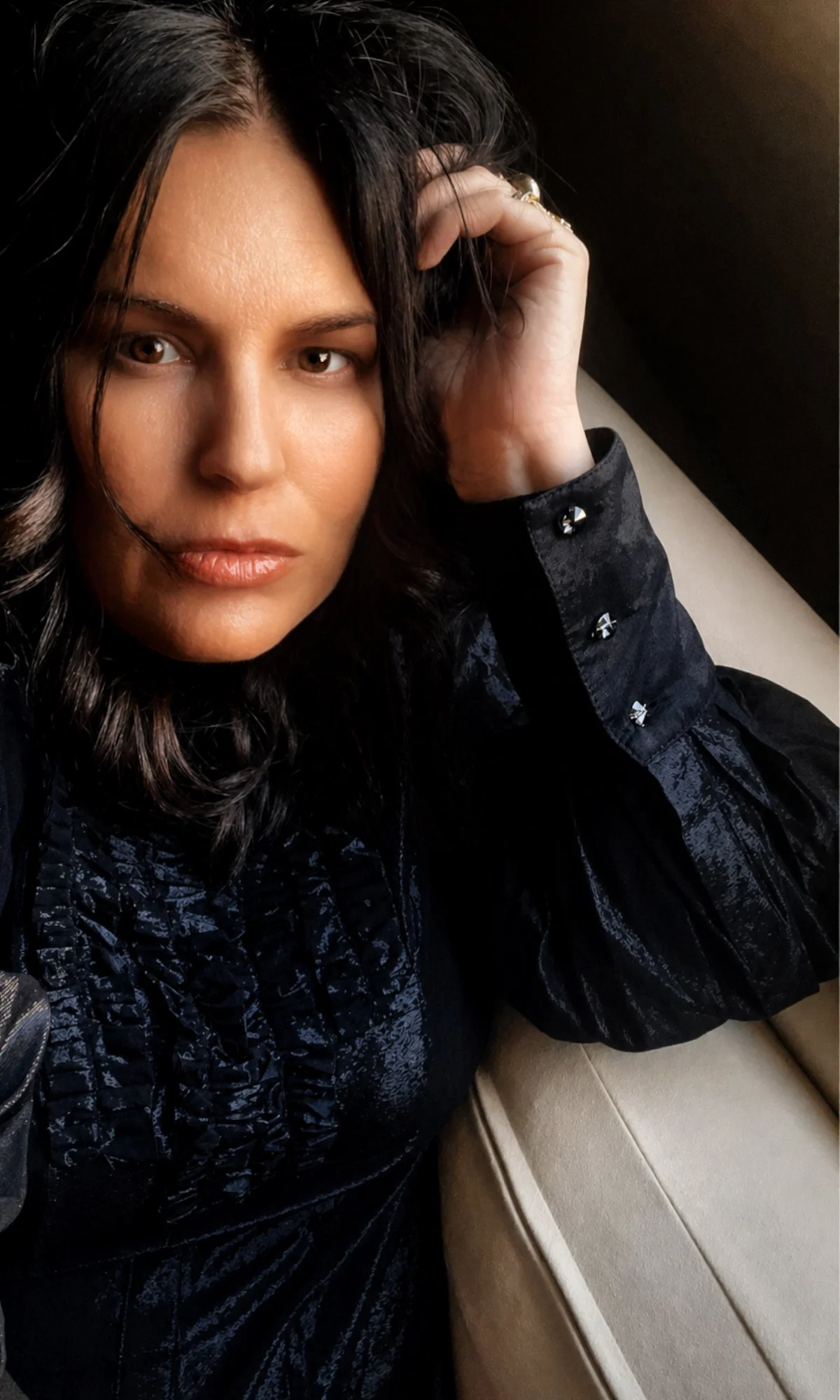
Written by Annita Apostolidou Platis
Visual Artist | Curator | Essayist | Writer | Poet | Fashion & Jewelry Designer
To learn more about the author and her work, visit: www.annitaplatis.com