
Jelena Jakovljevic | Interview
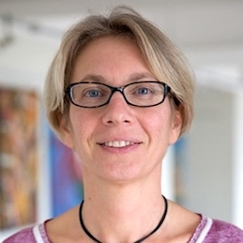
Pictured:
Artist Jelena Jakovljevic
“I hope the work leaves space for the imagination — a reminder that sometimes very little is needed for us to begin seeing something.
”
Jelena is a visual artist whose intuitive practice begins with mark-making rather than a predetermined image. Working primarily with India ink, alongside watercolour and charcoal, she explores how line, gesture and negative space can suggest figures, movement and emotion with minimal information. Unconventional tools and surfaces, from sticks and pen ends to repurposed or inexpensive paper, allow experimentation to shape each work.
The three works presented, Critics, Whispers and Conversations, emerged without planned narratives, their groups of figures gradually revealing observation, intimacy and exchange. In this interview, Jelena discusses the space between recognition and abstraction, the influence of tango on her treatment of the body, and the curiosity that continues to guide her experiments with larger figures and unconventional printmaking.
How would you describe your artistic practice at this point in your journey?
My practice is intuitive. I almost never begin with an idea — I begin by making marks. Through experimenting, something unexpected appears, and I follow it. If I start with a fully formed concept, it may still open up something new, but often in a direction I hadn't anticipated.
What feels most central to your work right now?
Simplicity is important to me, regardless of the subject. I'm fascinated by the line and by how little needs to be put on paper before the mind begins to complete the image. A few marks can suggest something recognisable while still leaving room for the viewer's imagination.
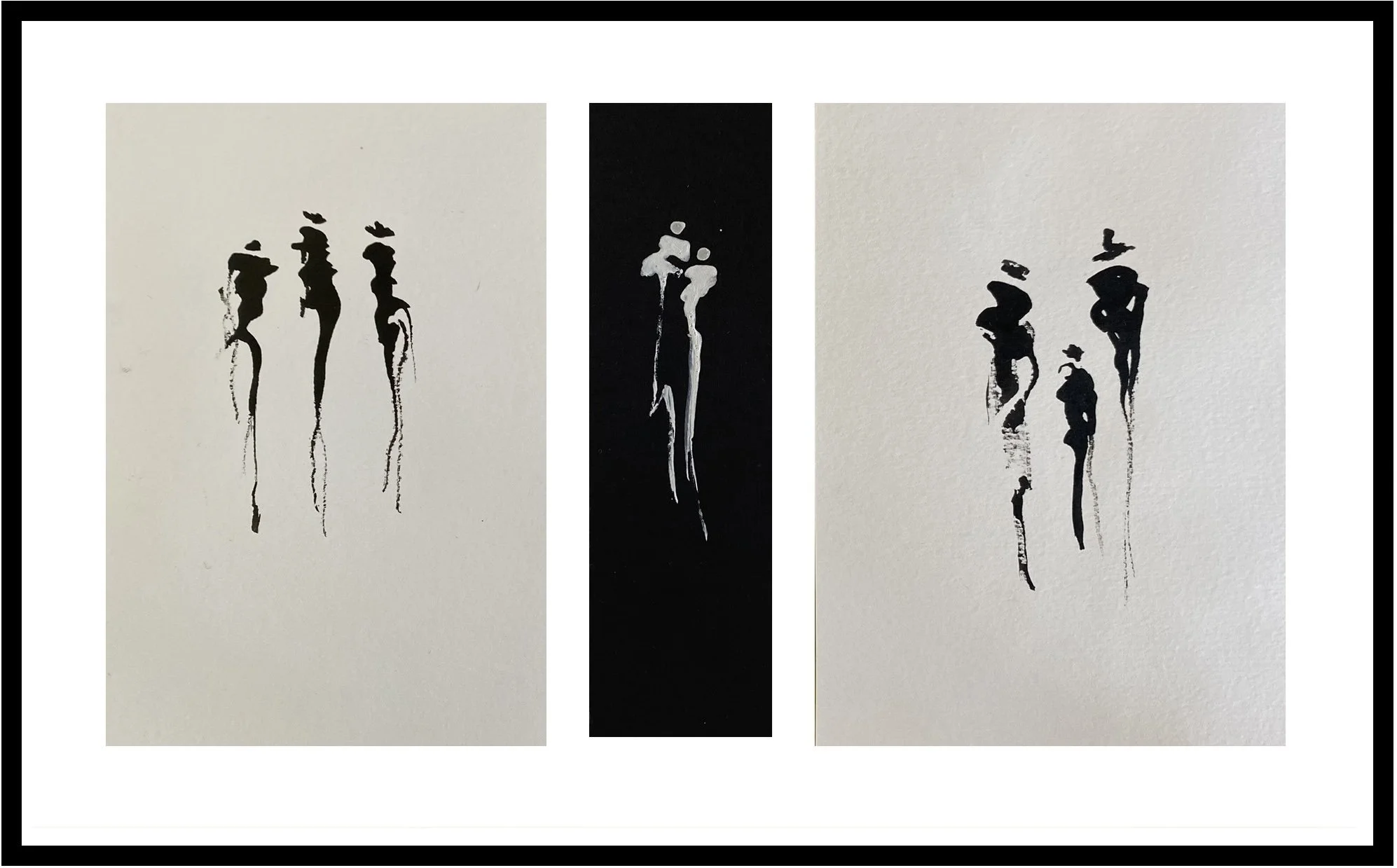
Pictured (above): Artwork ‘Conversations’
What themes, ideas, or questions are you currently exploring?
I don't consciously set out to explore particular themes. I'm more interested in experimenting and seeing what happens. The figure, however, is something I keep returning to — both in its simplest form and as it moves towards abstraction.
At the moment I'm moving between figures and unconventional printmaking, trying different tools, papers and surfaces. What continues to interest me is the space between recognition and abstraction — how little information an image needs before we still recognise something familiar.
Tell us about the works you are presenting with The Alchemical Art
The three works I'm presenting — Critics, Whispers, and Conversations — all developed intuitively, without a predetermined idea.
Critics began with a group of figures that, to me, seemed to be observing or commenting on one another. The title was originally Art Critics, and Critics remained.
In Whispers, the relationship between the two figures suggested intimacy. There is also something like a dance between them. I dance tango, and its movement and the relationship between two bodies can sometimes find their way into my work.
Conversations consists of three separate paintings in one frame. Each contains a small group of figures which, to me, appeared to be engaged in conversation. I didn't set out to depict particular conversations — it was simply something I recognised once the figures had emerged.
How does your process usually begin, and how does a work develop?
Usually, I simply have an urge to draw something without knowing exactly what it will be. I may begin with something simple — a flower, a landscape or a silhouette — and then start looking for another possibility. At other times, I might see something in nature that I find beautiful and want to respond to it in some way.
From there, I experiment. I change the mark, tool or surface, and sometimes something completely unexpected emerges. The final work may have very little to do with what first inspired it, but can develop into something with a life of its own.
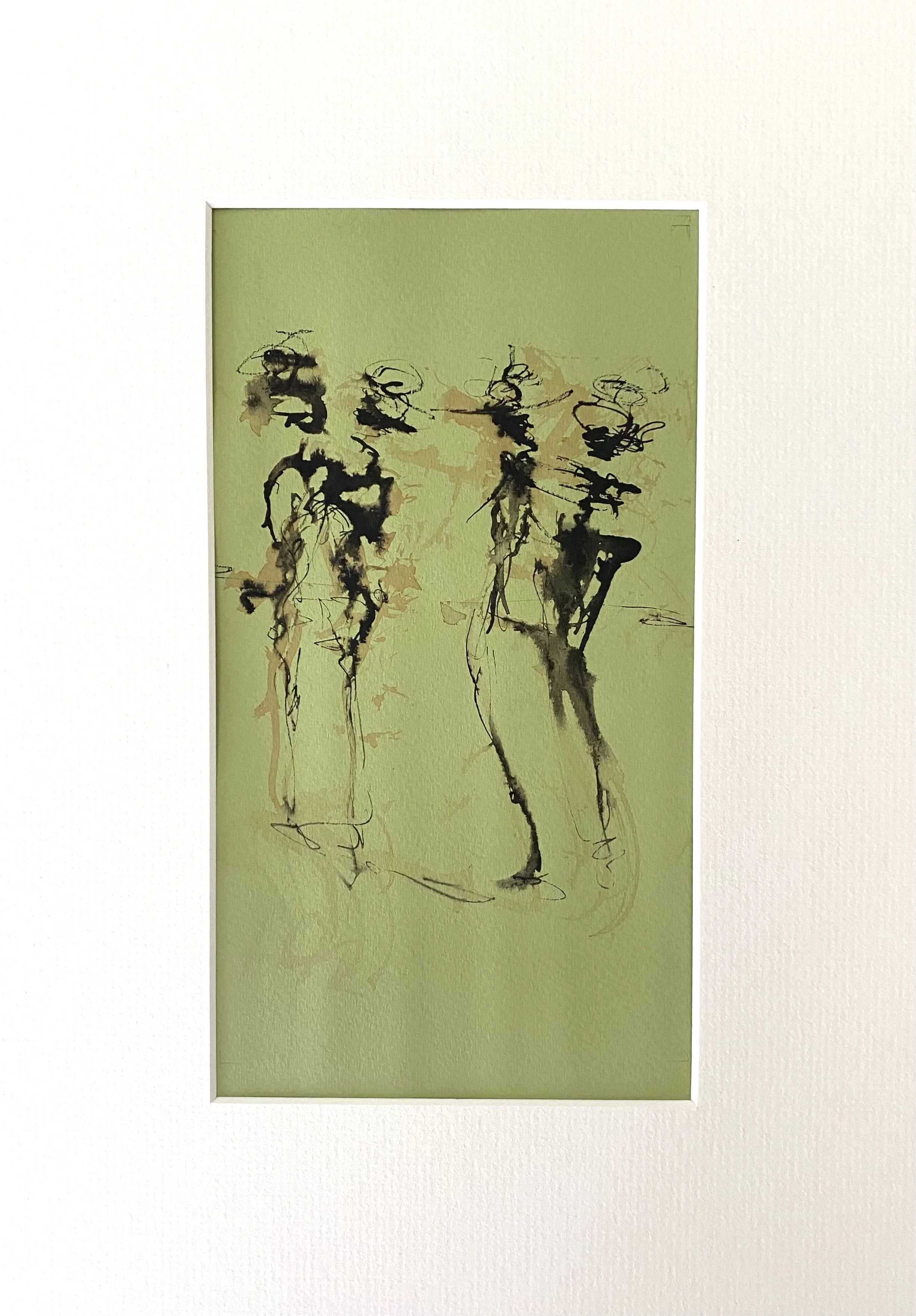
Above: Artwork ‘Critics’
What has been shaping this body of work, or your practice more broadly, at this moment?
Curiosity, more than anything. I'm interested in seeing what happens when I change the tool, surface or material. Sometimes even inexpensive paper can produce fantastic results. I'm not looking for one particular formula; I like discovering what happens along the way.
Are there particular materials, gestures, symbols, places, or visual languages that feel important in your work?
I somehow always end up returning to India ink. I also use charcoal, sometimes wetting it to get a different mark, and I like combining it with ink. The surface makes a big difference too.
I'm particularly interested in gesture and negative space. A line can suggest movement, weight or emotion without describing everything, while the untouched space allows the viewer to complete the image.
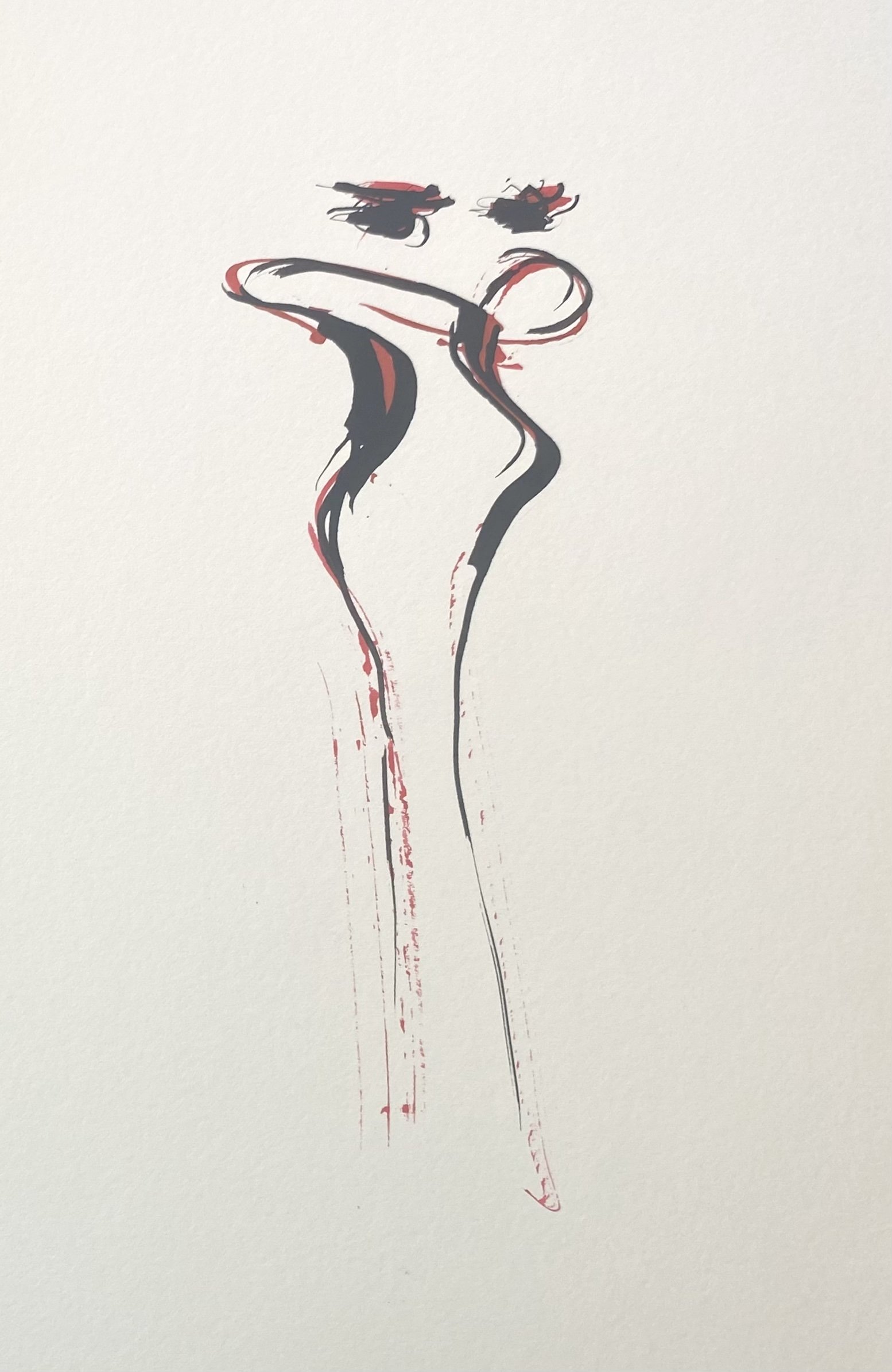
Above: Artwork ‘Whispers’
What drew you to present your work with The Alchemical Art?
What attracted me was the feeling that The Alchemical Art is genuinely looking for art and interested in the work itself. It feels like a curated space where the focus is on artists and their work, rather than simply on visibility. That was important to me, and I was happy to have the opportunity to submit.
What does visibility, exhibition, or being featured mean to you at this stage of your practice?
I've had the opportunity to show these and other works in solo and collective exhibitions, but I live in a small country, so reaching beyond that immediate environment is important to me.
Being featured gives the work a chance to reach people I would never otherwise meet. Once the work leaves the studio, it can have a life and a conversation of its own.
What are you currently curious about, experimenting with, or moving toward in your work?
I'm experimenting with larger figure works and different tools, including brushes, which I had tried to stay away from. I'm also experimenting with an unconventional approach to printmaking, using materials and methods in ways they are perhaps not traditionally intended, and sometimes working further on the print afterwards.
I don't know exactly where any of these experiments will lead, and that's part of what keeps me interested in making them.
What advice would you give to other artists?
Keep doing something. You don't always need to know where it is going. Experiment, follow your curiosity and see what happens. Not everything will work, but sometimes the unexpected result is the most interesting one.
What would you like the audience to take with them after encountering your work?
I hope the work leaves space for the imagination — a reminder that sometimes very little is needed for us to begin seeing something.
Artist Biography:
Jelena is a visual artist working primarily with ink, often exploring monochrome palettes with occasional touches of watercolour or charcoal. Her work plays with abstraction and mood—figures, forms, moments. She often works with unconventional tools and surfaces—sticks, pen ends, repurposed paper—allowing the materials themselves to shape the expression. Her subjects shift, but the thread is always simplicity, movement, and feeling.