
Ilma Mazrimienė | Interview
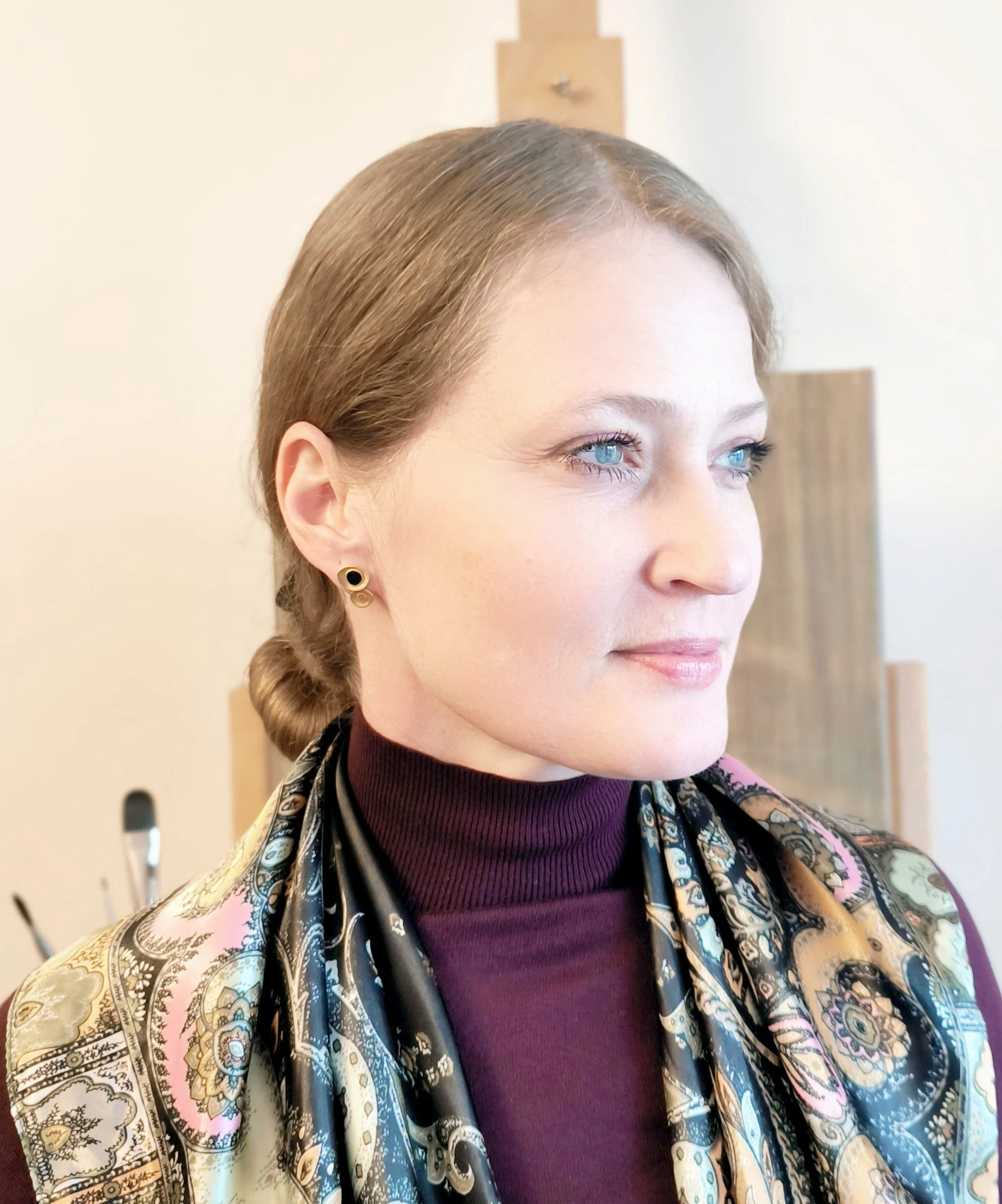
Pictured: Artist Ilma Mazrimienė
“Through my paintings, I look at the world, and the world looks at me and at itself.”
Ilma Mazrimienė’s practice centres on emotional states that are often quiet yet deeply present. Through simplified forms, softened features, and textured surfaces, her works hold moments of feeling rather than fixed narratives, allowing expression to emerge in a direct but understated way.
Across her paintings, emotion is not dramatized but distilled. Faces, gestures, and compositional shifts suggest inner tension, release, and reflection, creating a visual language that moves between openness and restraint. The works invite a slower reading, where subtle changes in colour, texture, and form carry the weight of experience.
In the following conversation, Mazrimienė reflects on emotion, awareness, and the role of painting as a space for reflection rather than resolution.
Ilma, how would you describe the heart of your practice at this moment? What feels most important in your work right now?
The essence of my practice is revealing human inner experiences, highlighting the importance of awareness, and exploring the journey of the soul. My work revolves around themes of introspection, dialogue with the world, self-discovery, inner transformation, and spiritual states.
Your paintings focus on emotions such as sadness, joy, and the tension between feeling and not feeling. What draws you to these quiet yet universal states?
I deeply feel the sadness that travels through the world, caused by injustice and cruelty. Yet my inner child sees the beauty of the world, never stops marvelling, rejoicing, and being optimistic. These experiences, combined with my personal journey, make me realise the importance of emotional awareness for fully living in the world. I believe this awareness is something we all share.
How does a painting usually begin for you? Do you start from a specific emotion, a memory, or something more intuitive?
Each of my paintings is a dialogue between myself, an imagined viewer, and the world. During the creative process, I converse with both my inner world and the outer world. It is not only an expression of personal experience. It is much more: it touches what resonates in most hearts, what is fundamentally shared by all people. Sometimes I know in advance what I want to paint, what feels important to me at that moment. Other times, I begin intuitively, making brushstrokes and sketches, and only then does it become clear what I will communicate to the world through that particular painting.

Sadness
In works like Sadness and Joy, the faces are simplified yet expressive. What role does minimalism play in communicating emotion?
External minimalism gives the viewer space to feel and to seek deeper meaning. What matters here is not realistic depiction, but the invitation to an inner dialogue, conveyed through colours, surface texture, and the gaze of the eyes.
Texture is very present in your surfaces. How does the physical act of layering acrylic relate to the emotional layers within the work?
The surface becomes a testament to reflection. Layering acrylic allows emotional depth to be embodied within the work. Often, one layer covers another: some parts remain visible, while others are partially concealed. This is how the painting’s inner structure is formed, along with a quiet story that lies beneath the surface.

Feeling vs Not Feeling
Feeling vs Not Feeling explores emotional protection and blockage. Why do you think we sometimes choose to ignore our inner world?
Blocks and ignoring our inner world often stem from self-preservation. Some experiences are so painful that they are simply blocked. Sometimes we suppress emotions for the sake of others, to please them, or because we cannot say no. In doing so, we push ourselves into a deceptively safe state. Feeling vs Not Feeling speaks about emotional blocks and highlights the importance of recognizing them: it’s about letting go and learning to release.
Walking suggests a life journey and the traces we leave behind. What does this idea of “trace” mean to you personally?
It reflects a responsible approach to life. I aim to leave a spark of inner light in the hearts and memories of others.
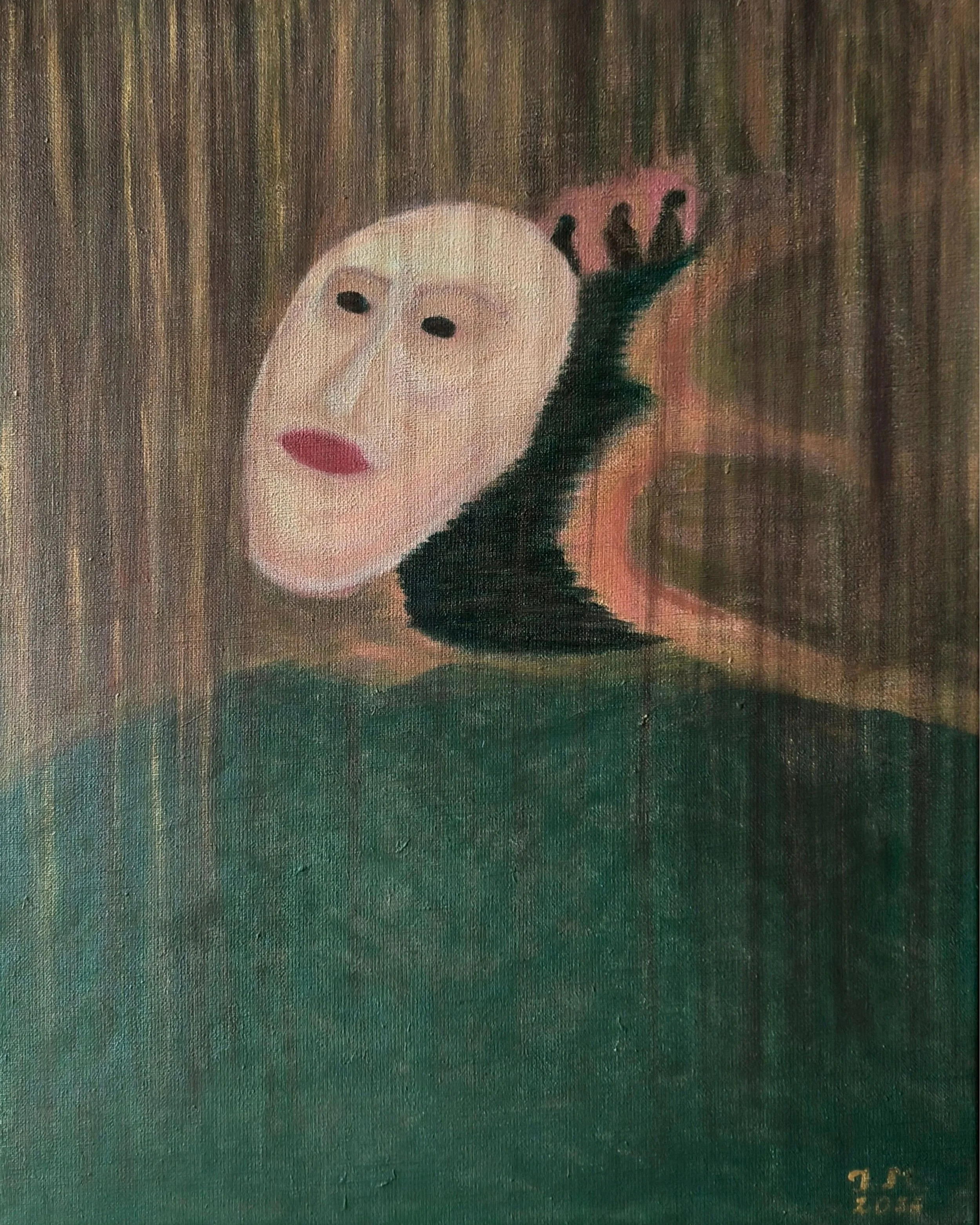
Walking
How does this body of work sit within your wider artistic path? Does it feel like continuity, deepening, or a new direction?
My artistic journey began with creating motivational designs on products. Now it has evolved into acrylic painting on paper and canvas, which allows me to explore more deeply the human inner world, emotions, and abstract ideas.
When viewers stand in front of your work, what do you hope they recognize in themselves?
Their true self.
As you continue developing your practice, what emotional or conceptual territory are you interested in exploring next?
The human inner world – its emotions, decisions, and abstract ideas about our relationship with the world – remains the focus of my artistic reflection.
For artists who want to create work rooted in emotion without becoming overly literal, what insight would you share?
Trust your intuition when painting emotion. Let your hand move instinctively. Allow the viewer to feel it for themselves.
If you could express your current artistic focus in one sentence, what would it be?
Through my paintings, I look at the world, and the world looks at me and at itself.

Joy