Matthew Morpheus |Interview
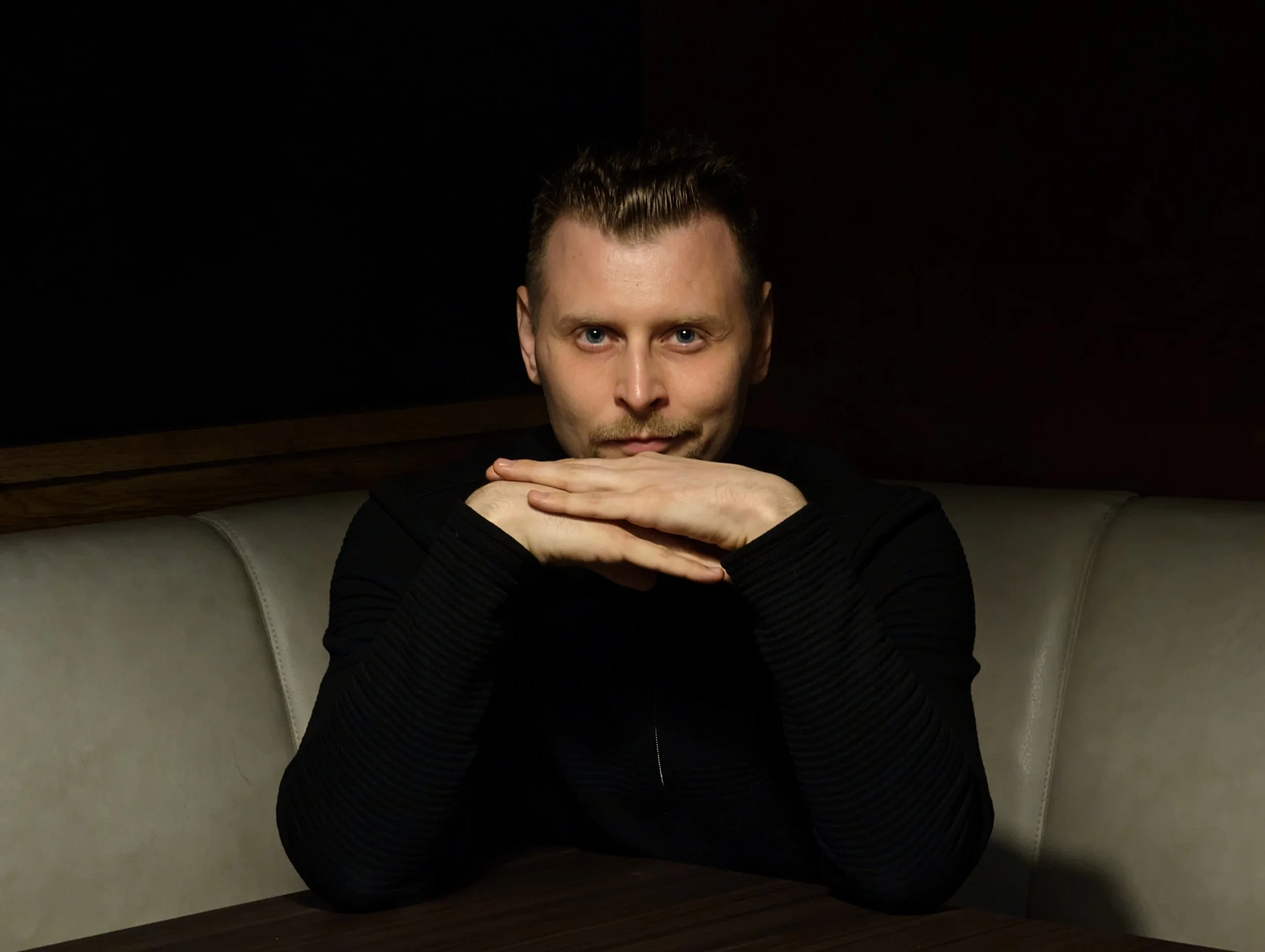
Pictured: Artist Mathew Morpheus
“NEW WAR - NEW WORLD – NEW ART”
Matthew Morpheus constructs dense, intricate visual fields where abstraction and symbolism converge. Across his compositions, fragmented forms, repeating motifs, and layered imagery create a sense of constant movement, where meaning is not fixed but continuously shifting between order and chaos.
Working across detailed ink drawings and digitally assembled collages, his practice reflects a world saturated with information, contradiction, and cultural overlap. References to systems, power, identity, and contemporary life emerge through accumulation rather than direct narrative, inviting the viewer to navigate each work as an evolving structure rather than a singular message.
In the following conversation, Morpheus reflects on process, symbolism, and the role of image-making within an increasingly complex visual landscape.
Matthew, how would you define your practice at this point in time? What feels most central to your work right now?
My artistic practice is an ongoing exploration of what I call “Zero Emotion.”
A person can show only one emotion on their face - fear, joy, grief or sympathy - but their inner life is always multilayered. All these intertwined experiences, from love to hate, merge into one central, deeply hidden feeling; this is what I call “Zero Emotion”.
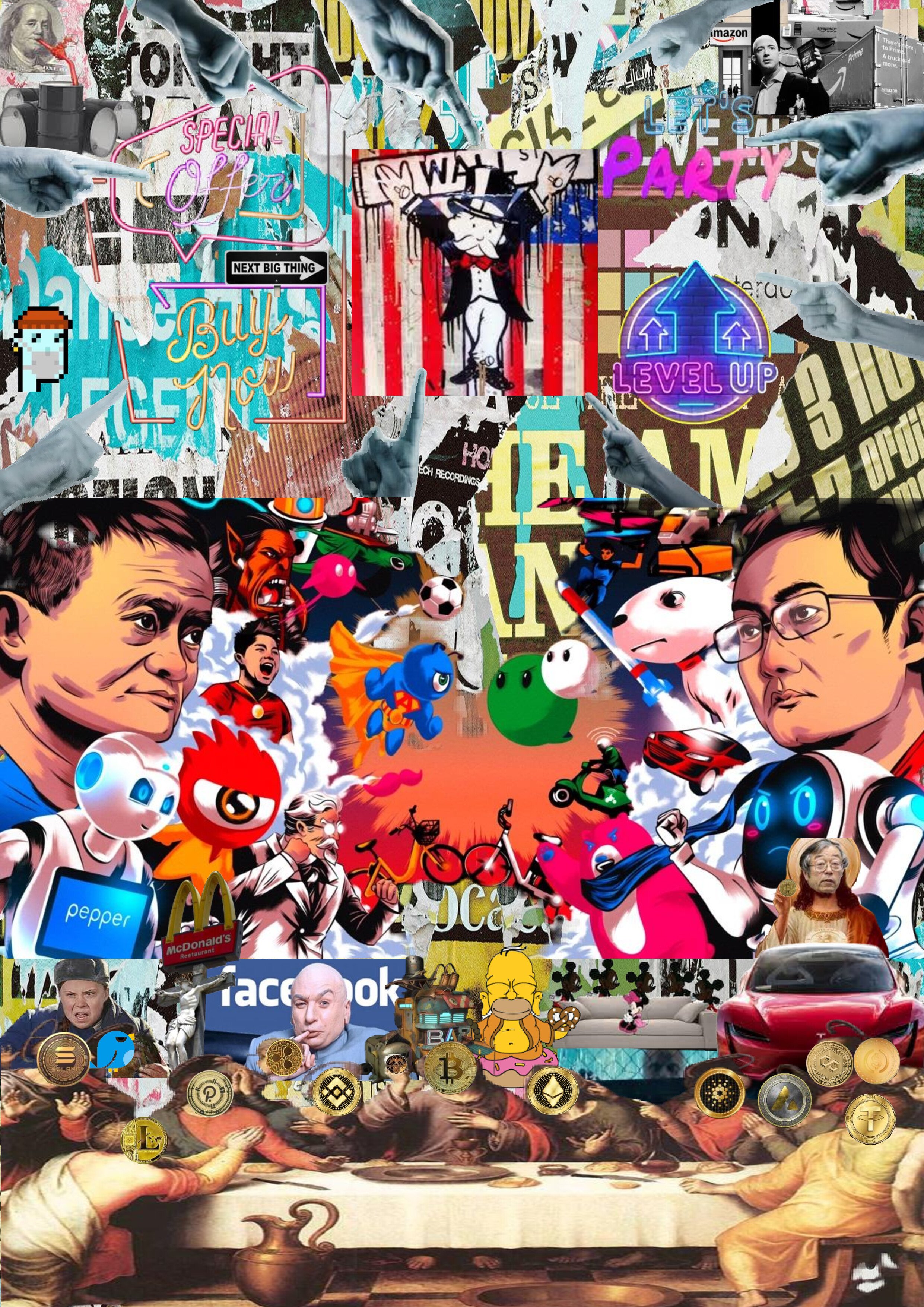
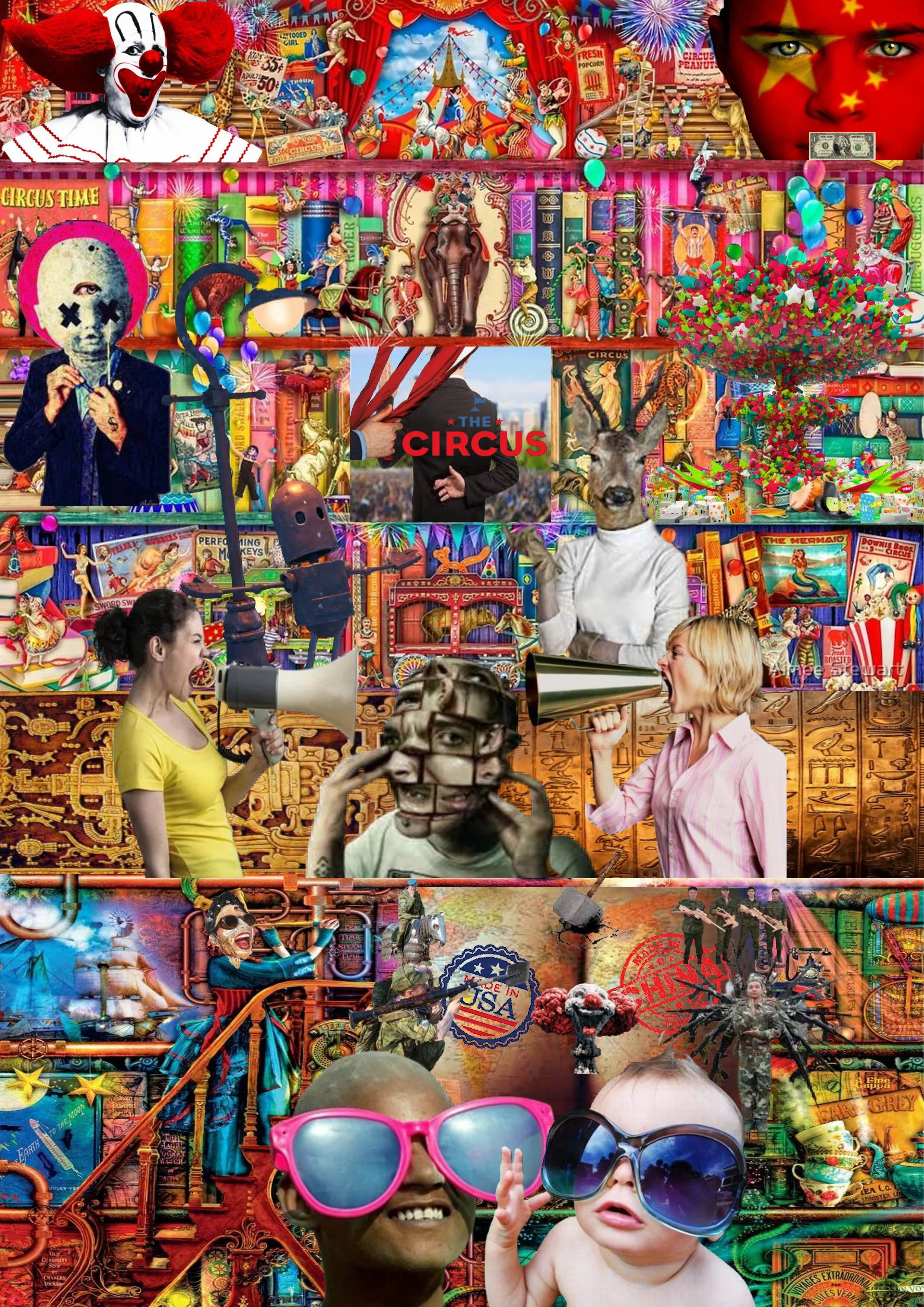
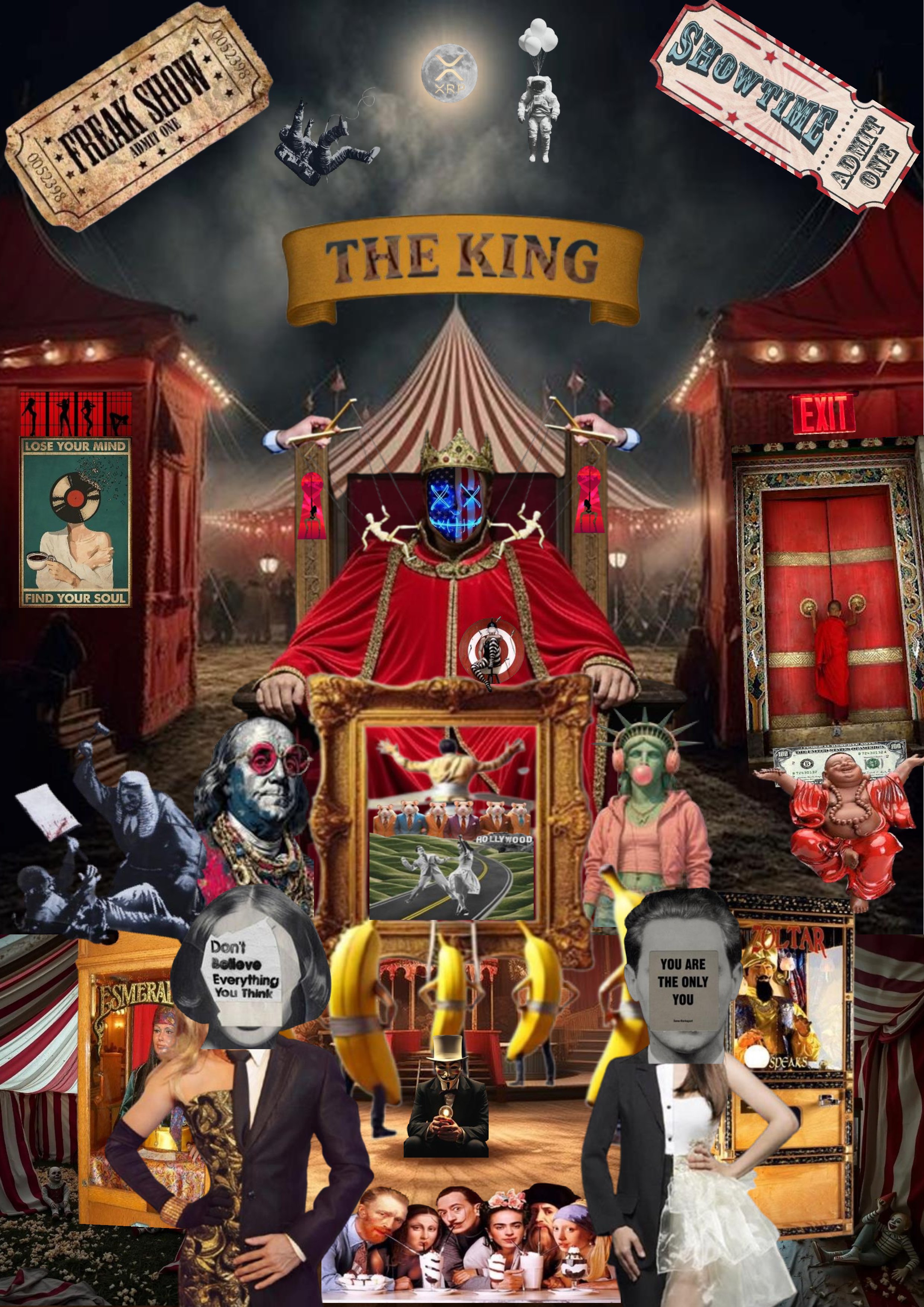
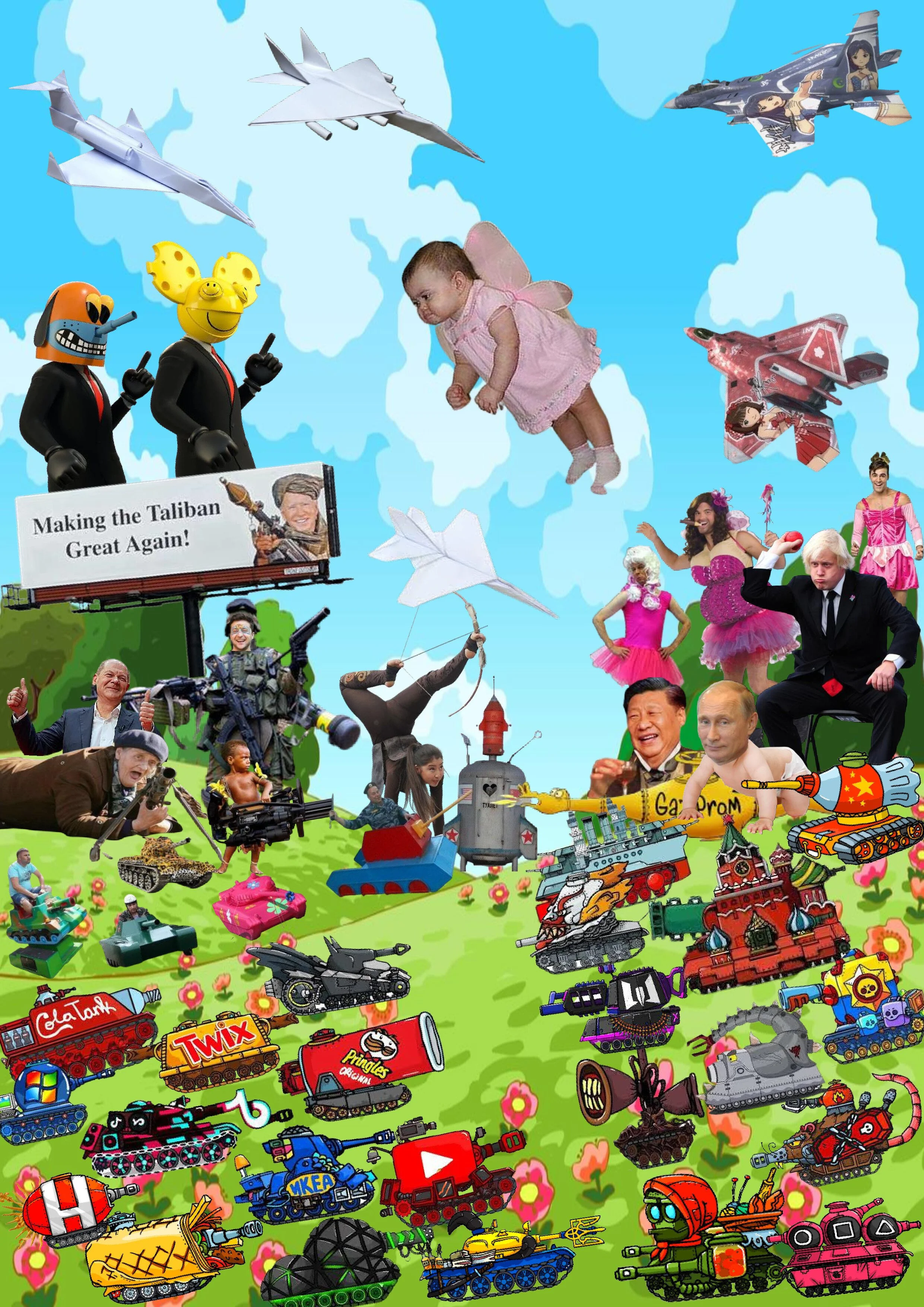
What matters most to me in my work is creating images that exist inside this tension: at first glance they may seem calm, distant, even cold, but beneath the surface there is desire, anxiety, passion and conflict that never fully resolves. Through digital collage, drawing and installations, I combine symbols then arrange and layer them like a mosaic of overlapping feelings, so that each viewer can search for what resonates with their own perception of the world and their own inner life.
Your work moves between highly detailed abstract drawing and layered digital collage. What draws you to working across these two very different visual languages?
At the moment, I don’t see these two languages as separate opposites; to me, they are two sides of the same process.
Drawing allows me to immerse myself in obsessive detail and, line by line, create a kind of controlled chaos. It is slow, almost meditative work, in which I can attune myself to very subtle states and approach my conception of “Zero Emotion” through rhythm, texture and structure.
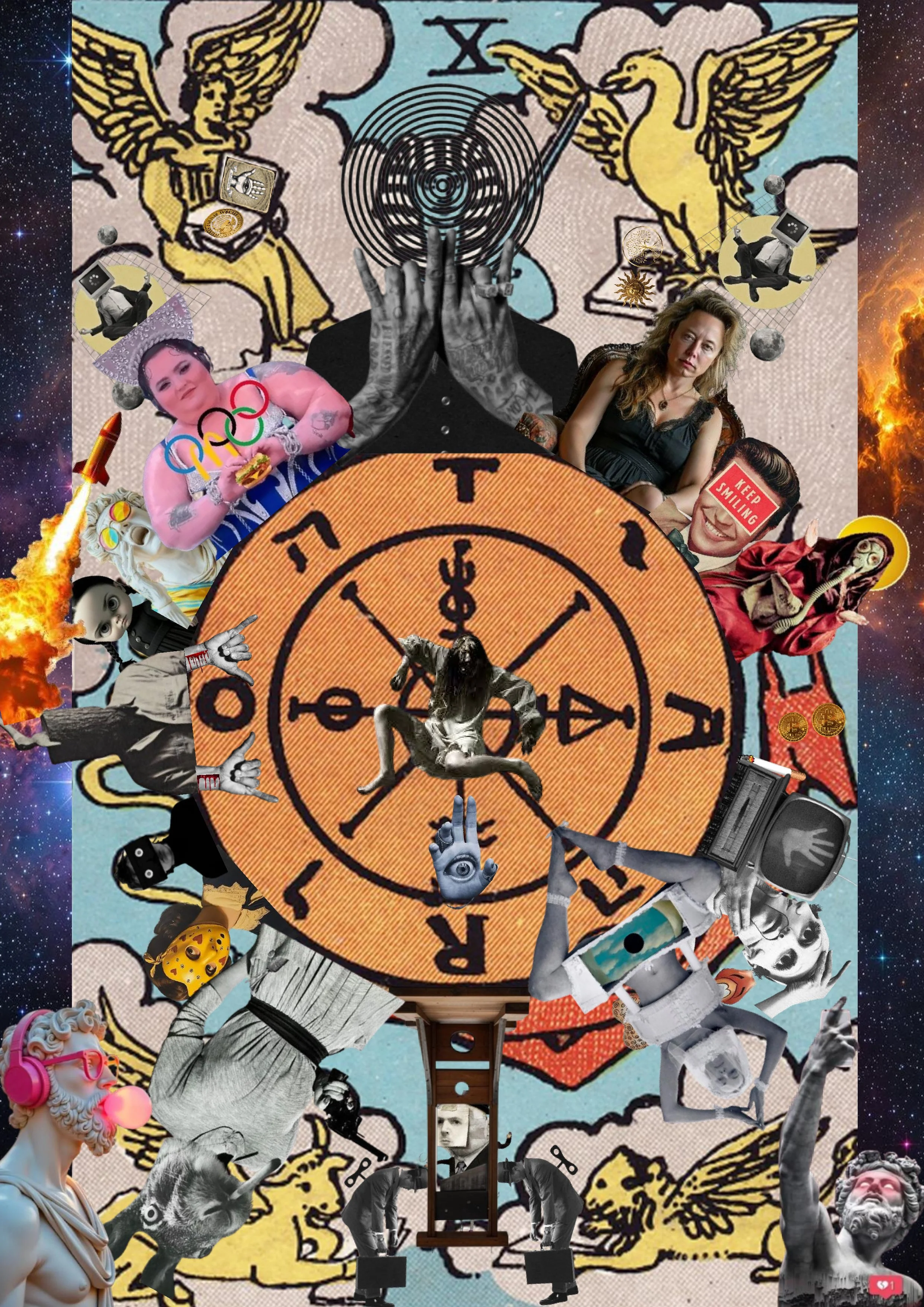
Digital collage, on the other hand, offers the opportunity to “blow up” this structure: I can work with photographs, fragments of our era, political and religious symbols, and the information noise of the modern age, and assemble them into a single multi-layered frame. A collage is a way of speaking about everything at once, whilst a drawing is a way of constructing the structured logic of a graphic narrative. Together, they help me maintain a balance between chaos and order and create images in which the viewer perceives harmony and contradictions simultaneously.
How does a piece usually begin for you? Is it driven by an idea, a symbol, or something more instinctive?
Everything happens quite spontaneously. When I create my graphic works, I put on my favourite music and let my subconscious self take over. With collages, however, I usually start from a clear concept - a triggering event, a fear, or a hope - and then search for symbols and fragments that can bring that story to life.
Your black-and-white works feel immersive and almost meditative, while your collages are dense and confrontational. What interests you about this contrast?
For me, this contrast is a way of speaking about the same inner state from two opposing directions. My black-and-white works, such as “The Way of a Pilgrim” or “Heroes,” are like slow breathing: they are built line by line, almost like a mantra, and allow me to sink into a quieter, meditative space where everything remains suspended. In contrast, the multilayered digital collages are a kind of “TikTok on fast‑forward” - they compress news, religion, symbols, politics and desire into one aggressive frame, mirroring the way the contemporary world bombards us with information.
What interests me is that, despite their visual opposition, both series are ultimately about the same thing: an overload of feeling that can initially appear as calmness or even emotional numbness. One visual language whispers, the other screams, but together they form a more complete picture of how we experience reality today - and each viewer brings their own reality to it, shaped by the specific information environment that surrounds them.

There is a strong presence of symbols, systems, and cultural references throughout your work. How do you approach building meaning without making it too fixed or literal?
For me, the symbols in my collages are not a code to be correctly deciphered, but a field of possibilities. I choose widely recognisable cultural references - religious icons, political logos, internet memes - and then deliberately place them in unexpected contexts, breaking their hierarchy, repeating or distorting them.
Rather than explaining what each element “means,” I try to stage a situation where different meanings collide and contradict one another, so the viewer is pushed to complete the work through their own associations. In this sense, “Zero Emotion” becomes important again: I avoid excessive pathos or direct illustration and keep the surface relatively cool, so that the narrative stays open and ambiguous rather than fixed like a slogan or a poster.
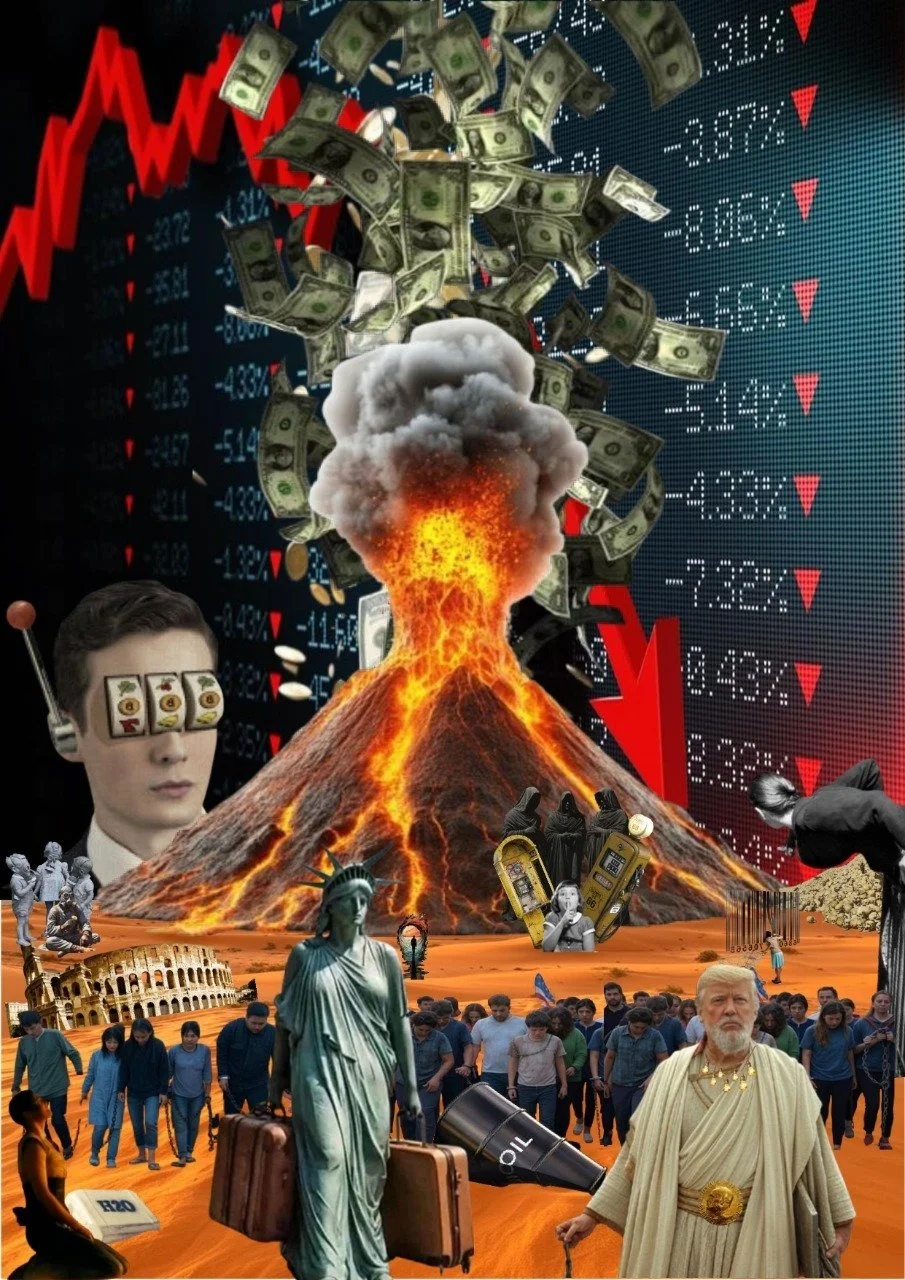
Many of your collage works reflect contemporary structures of power, media, and belief. What role does observation of the modern world play in your process?
We are all living inside a Matrix. It is as simple as it is impossibly complex, and we have already entered an official Era of War - an era of shifting consciousness. I see myself merely as a conduit between the world of illusion and reality, and the multi‑layered structures in my works are a way for the viewer to step outside the system, or at least to attempt that step.
You describe your work as part of a broader philosophical dialogue. How do you balance conceptual thinking with visual intuition?
For me, concept and intuition are not opposites. The idea gives me a direction, but then I let the image grow intuitively, even if it disrupts or shifts the original concept.
How does this body of work sit within your wider artistic path? Does it feel like a continuation, or a shift in direction?
If we take into account both my earlier work and my newer direction with conceptual installations, then on one hand the drawings and collages clearly grow out of everything I have been doing for years: the idea of “Zero Emotion” and the dialogue between my inner world and premonitions still lie at the core. On the other hand, the new pieces push these themes further - they are more detailed, and I experiment much more with scale and new technologies, so for me it feels like turning a new page rather than starting a completely different book. I remain faithful to my idea.
When viewers encounter your work, what do you hope they question or reconsider?
Our reality is not entirely real, and our desires are not entirely our own. We are saturated with the consumerist noise of imposed desires, projected through the media, and this is why we are not truly free.
When viewers encounter my work, I do not want them to look for a single “correct” meaning; I want them to begin asking what actually feels real to them, and what has been quietly programmed from the outside. I hope they reconsider how much of their emotions, beliefs, and even identity are shaped by media, politics, religion, and technology, and how much still comes from a place they can honestly call their own. Ideally, the work functions like a small glitch in their usual way of seeing the world, opening a space where doubt, curiosity, and the search for a true self can appear at the same time.
As your practice continues to evolve, what ideas or themes are you currently exploring more deeply?
Right now, I am exploring how technology and propaganda shape what we feel and what we believe. I am also more and more interested in inner and outer journeys of the individual - wars, conflicts, crises - as metaphors for searching for yourself in a world full of contradictions, yet still driven by a human desire for spiritual growth through total self‑destruction. Our current reality is collapsing. It is time to create a new one - to create our own “O brave new world.”
What advice do you have for other artists?
My main advice is to stay true to your own vision, even when it doesn’t align with trends or expectations, and to allow yourself plenty of failure along the way - experiments, mistakes, and “unsuccessful” works are not a problem, but the raw material from which your real visual language grows.
If you had to distill your current artistic focus into one sentence, what would it be?
NEW WAR - NEW WORLD – NEW ART